Drawn Together

The first time I walked through the gates of a maximum-security prison, I was ten years old.
Back in the 1970s, my father Roger volunteered with a prison visitation program that paired ministers with inmates at Stateville, just outside Joliet, Illinois. Most Saturdays he went alone. But one Saturday, he decided my brother and I were coming with him. As we climbed into Dad's two-door Malibu Classic, I thought it sounded like a terrible idea. Today, I'm pretty sure he knew exactly what he was doing.
Stateville wasn't simply a building. It felt like another world. Towering walls surrounded the compound. Guards stood watch from towers. Heavy steel doors didn't just close; they slammed with a metallic crack that echoed through the corridors. One gate locked behind us before another opened ahead. Somewhere around the fourth steel door, I remember wondering whether Dad had forgotten to mention we weren't coming home.
Like most kids, my understanding of prison came from television. I expected to meet someone loud, angry and frightening. The man we were visiting, Jimmy Moore, certainly looked the part. He was big, probably close to 300 pounds, and towered over us. I was terrified. Then he smiled and spoke softly. He asked my brother and me about school. He laughed easily. Somewhere between those steel doors and the end of our visit, the picture I'd created in my mind quietly disappeared.
Jimmy was serving a lengthy prison sentence. He always maintained his innocence. As a child, I wasn't trying to sort out guilt or innocence – I was simply trying to understand how someone inside those walls could seem so...normal.
Then I discovered something else. Jimmy was an artist.
A few weeks after our visit, a large manila envelope arrived at our house with a return address that read: Stateville Correctional Center. Inside was a pencil drawing – Jimmy had decided to teach me how to draw.
Our art lessons happened through the mail. He would send me a study of an eye, a hand, the folds of a shirt, or the way light wrapped around an object. I'd copy it in pencil and send it back. A couple of weeks later another lesson would arrive. As a young boy, I couldn't wait to get mail from Stateville Prison.
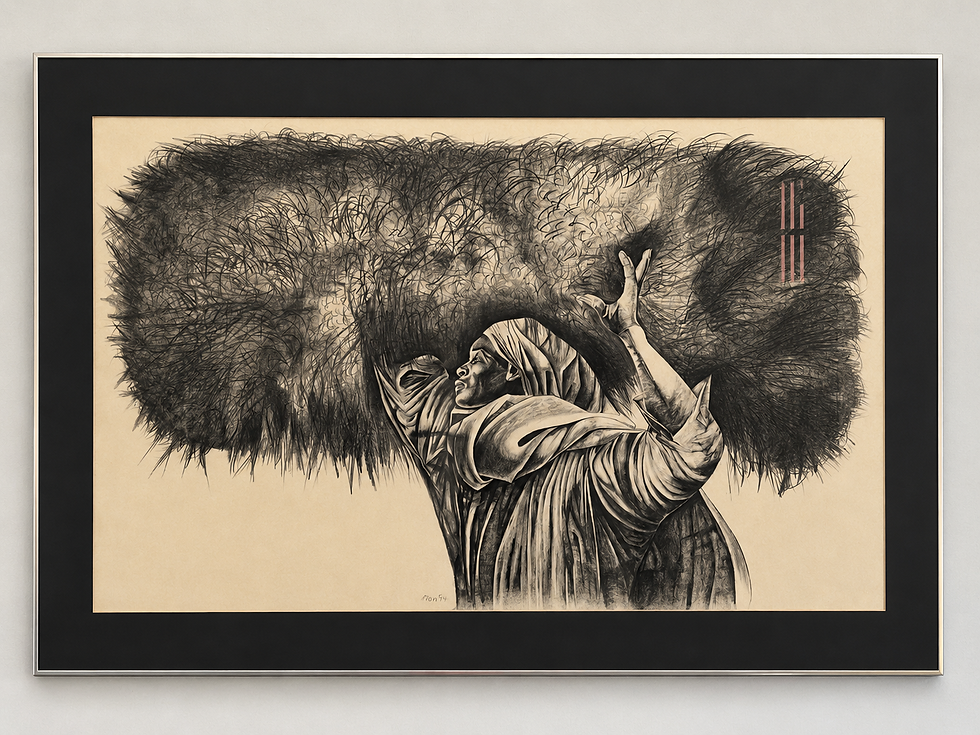
Years later, my father brought home a large, framed drawing of an incredibly confident woman that eventually hung behind the office desk at his church for decades. To my brother and me, it wasn't simply artwork. It was Jimmy's artwork. It represented patience, generosity and hope. I never questioned where it had come from until my wife Shazi and I recently moved a few framed pieces of art around our bungalow. We found Jimmy's drawing in a closet along with a couple of other paintings I've collected over the years, and we decided to hang it over our living room couch.
A friend of ours who had worked for Bonhams happened to see it a few days later.
"You know that's a Charles White drawing...right?"
Well...no. We didn't. Jimmy hadn't created the composition. He had painstakingly recreated it. I'll admit, I felt disappointed. For decades, I'd believed I was looking at Jimmy's original work. Had I misunderstood the story all these years? The irony wasn't lost on me. I never questioned the provenance of one of the most meaningful pieces of art our family owned. Truth is, I wasn't really looking at a Charles White drawing. I was looking at Jimmy.
The more I thought about it, the more I realized I'd been asking the wrong question. Artists have learned by studying masters for centuries. Jimmy wasn't trying to deceive anyone. He was learning from an artist he admired, one who spent his career creating what he called "images of dignity." Somehow, those images found their way into a prison cell. From inside that prison cell, he passed those lessons on to a young boy. The drawing wasn't original. The relationship was.
Two weekends ago, the whole story unexpectedly came rushing back while visiting my son Tristan in New York. The city was buzzing after the Knicks' championship. We squeezed into tiny Brooklyn bars to watch World Cup matches with people wearing jerseys from every corner of the globe. Nobody seemed to care where you were from as long as you cared about the match.
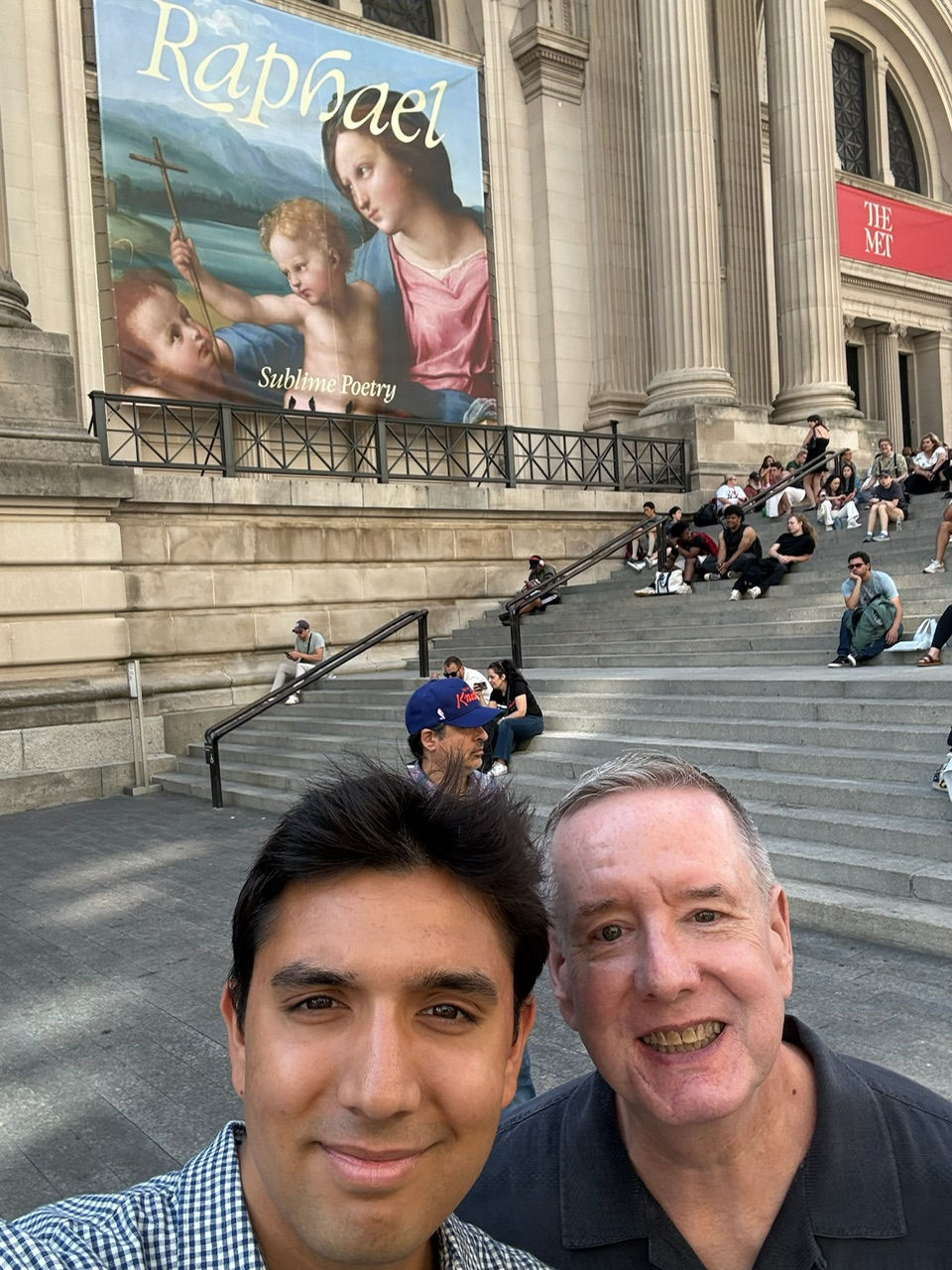
Over the weekend, we also wandered through the Met and the Whitney Biennial. It was fascinating to move from the art of ancient civilizations to contemporary works created with digital apps that didn't exist a few years ago. Across thousands of years, artists have wrestled with the same questions: originality, influence, technology and truth. Only the tools have changed.
We're living through one of those rare inflection points in history where technology forces us to rethink ideas we thought we understood. Artificial intelligence now creates paintings, photographs, music and writing so convincing that we're constantly asking ourselves: Is it real? Who actually created this? Is it authentic? Maybe that's not always the right question.
Authenticity isn't always found in the origin of a thing. Sometimes it's found in the intention behind it. Jimmy's gift wasn't the charcoal drawing. It was the hours he invested encouraging a young boy. My father's gift wasn't taking us to Stateville. It was showing us that before Jimmy was an inmate, he was a human being.
I've spent my professional career telling stories visually and leading creative teams around the world. It's funny where a life's work begins. My first art teacher wasn't someone from an art school or a museum. He was an inmate at Stateville Correctional Center.
As America celebrates 250 years of independence this weekend, I've found myself thinking about another kind of freedom. Not simply freedom from the walls we've built. But the freedom to look beyond them.
About Greenland Sharks
Greenland Sharks is a Chicago men's group who value friendship, experiences, and the long swim. Just a crew that shows up. No speeches. No name tags. No nonsense.


Comments